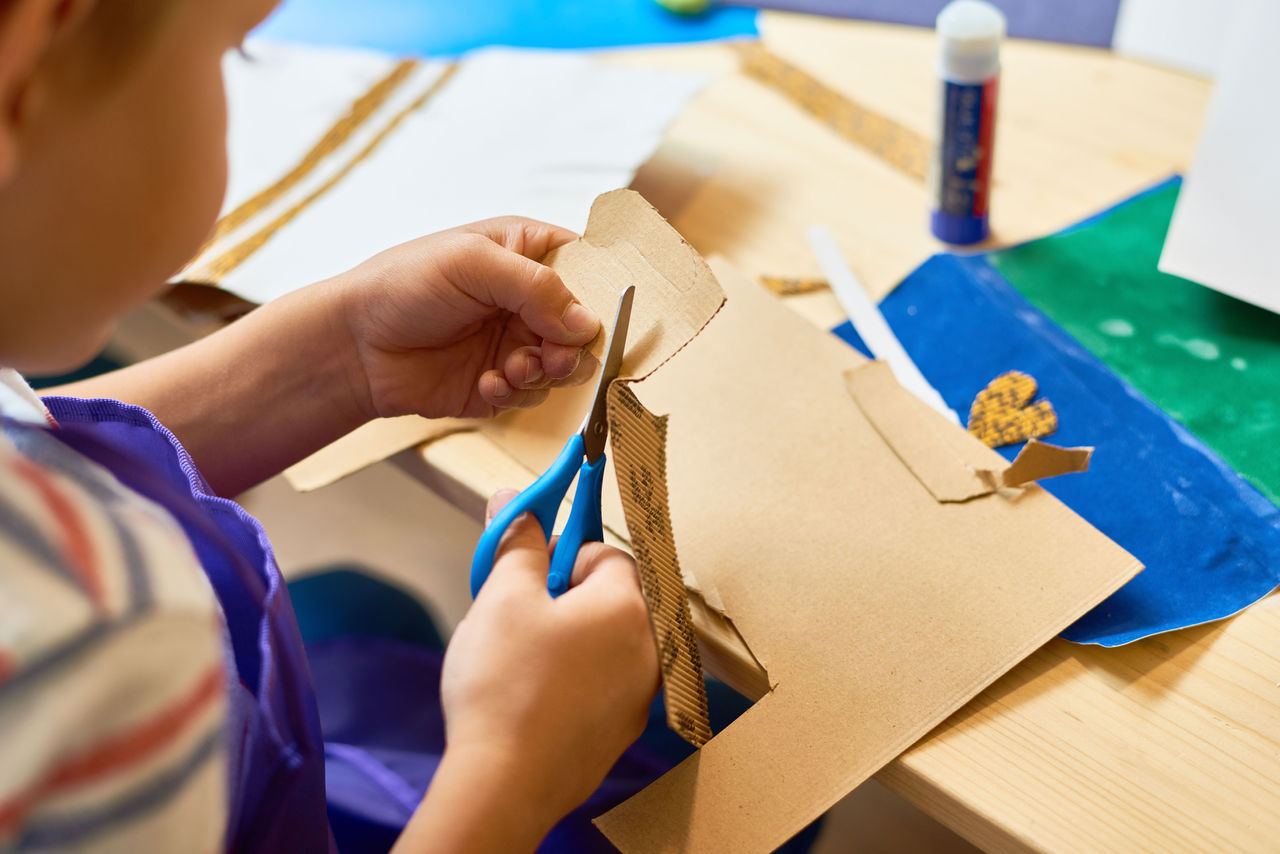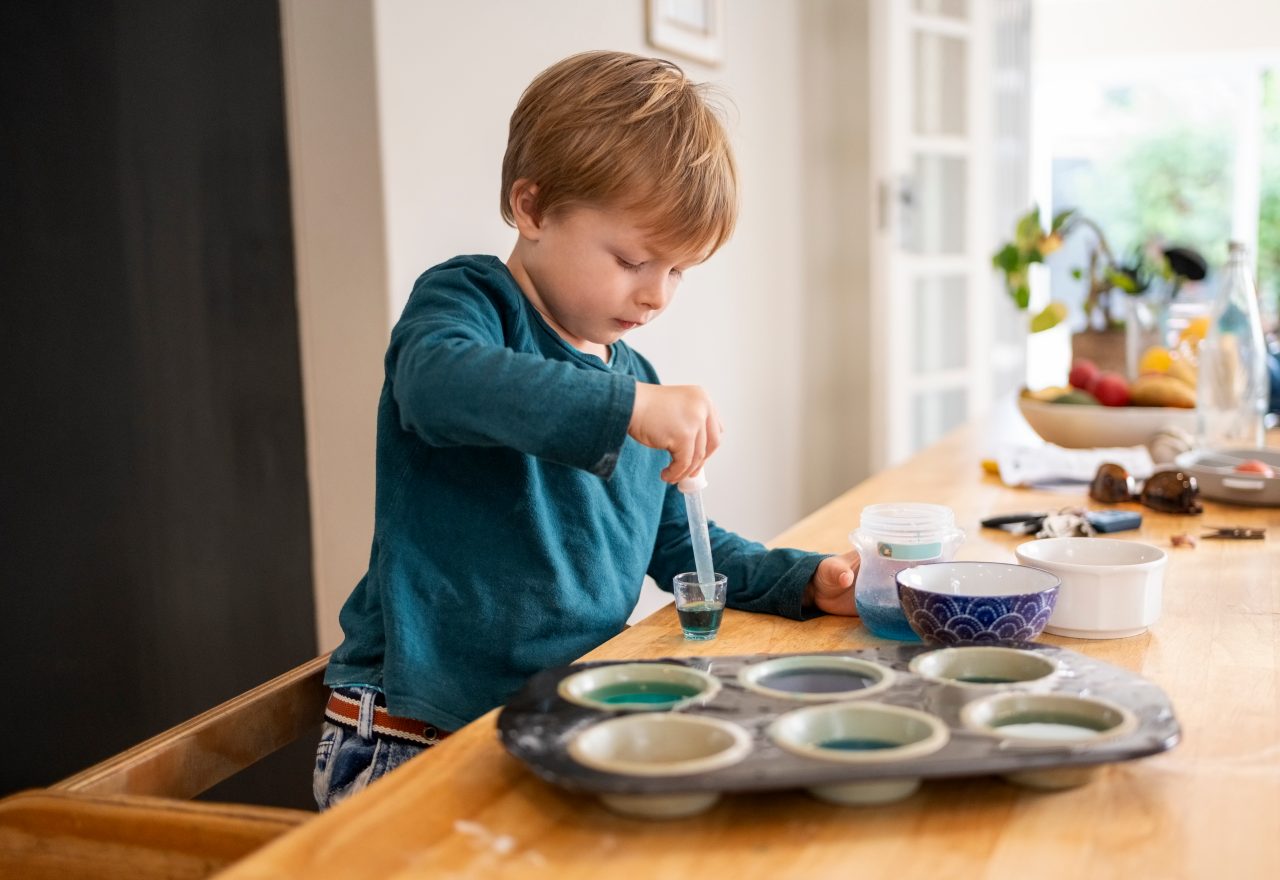
Kids are natural scientists. From asking (what feels like) a million questions a day, to splashing in puddles or being mesmerized by trash trucks, preschoolers explore the world through observation, experimentation and wonder. Because of this, teaching children about science isn’t complicated. All it takes is nurturing their innate curiosity and letting them play.
Why Science Matters in Early Childhood
Introducing science concepts in the preschool years builds critical-thinking, problem-solving and language skills that support learning across multiple subjects. When children engage in simple experiments and activities, they’re making predictions, observing outcomes and communicating what they notice, which are foundational habits of lifelong learners. And early exposure to science helps children feel confident and curious in new situations, a mindset that will serve them well in their future.
What Science Looks Like for Preschoolers
At this age, learning happens through exploration and play. Mixing baking soda and vinegar, watching a seed sprout or sorting rocks by size are all meaningful science experiences for three- or four-year-olds. The goal isn’t to memorize the periodic table, but to encourage children to be curious and engaged. Simple observations, open-ended questions and opportunities to experiment are the building blocks of early science learning.
Easy Science Experiments for Preschoolers
You may not realize it, but you have the makings of a science lab already at home. Some of the most effective preschool science experiments use everyday materials. Exploring what sinks and floats in the bathtub, watching ice melt in different conditions, growing beans in a clear cup or mixing colors with food dye and water are incredible ways to introduce scientific thinking. For a seasonal option, this salted snowflake craft is a beautiful, hands-on activity that lets children observe absorption up close.
Preschool Science Activities That Build Key Skills
The best science activities for preschoolers teach them more than just scientific knowledge. They help them build fine motor skills, vocabulary, patience and collaboration. Digging in a garden enhances sensory awareness and teaches children about living systems. Creating a ramp and testing how far different objects roll introduces force and motion. Sorting leaves by shape or color supports early math skills.
Connecting Science to STEAM Learning
Science is one of the five pillars of STEAM education, along with technology, engineering, arts and math (it’s sometimes referred to as just STEM). In high-quality early childhood programs, age-appropriate STEAM concepts are part of everyday learning. Playing with blocks introduces engineering and spatial reasoning. Counting ingredients in a cooking activity combines math and science. Exploring how sound travels or why shadows change connects physics and observation. STEAM in preschool is not a separate subject but an approach to curious, integrated learning.
How to Encourage Scientific Thinking at Home
You can easily foster your child’s scientific mindset by asking open-ended questions and resisting the urge to provide immediate answers. “What do you think will happen if we add more water?” or “What did you notice?” invites children to think, predict and reflect. “I don’t know, let’s find out together” is also a perfect response. Let your child lead the exploration, make mistakes and try again. This process of inquiry is the heart of scientific thinking, and it starts long before children enter a classroom.
Science is all around us, and every curious question your child asks is an opportunity to learn together. Explore The Goddard School® blog to discover more activities, ideas and resources for supporting STEAM education at home and in the classroom.