There’s an old saying that goes: There’s no such thing as bad weather, only bad clothes. Does that pertain to rain or also to snow? Both. While a lot of us would much rather be inside snuggled up with warm blankets and hot cocoa, there are benefits to playing outside in the cold.
Playing outside in cold weather is safe for kids as long as they’re dressed properly and you keep an eye on the temperature and wind chill. Winter play helps children build strength and balance as they trudge through snow and uneven ground, gives them space to burn off cabin fever and opens up a whole new world to explore, from frozen puddles to animal tracks. Just remember to dress your child in warm, waterproof layers, take breaks to warm up and keep outings short on very cold or windy days.
Bundle up and try one of these winter adventures together!
Benefits of Outdoor Play in Cold Weather
Winter turns the familiar outdoors into something new. Trees have no leaves, frost or snow covers the ground, puddles freeze and, somehow, the world sounds a little quieter. That makes playing in the cold weather a great chance to explore nature in unfamiliar ways.
Winter outdoor play helps children:
- Build gross motor skills. Walking, climbing and digging in frozen or snow-covered ground builds strength, balance and coordination.
- Release energy. After being pent up inside, fresh air and space to move can help kids feel calmer and sleep better.
- Explore science. Things freeze and melt. Animals hibernate. There’s so much to explore!
- Use their imaginations. Snow is the ultimate open-ended material for pretend play. If you don’t live in a place where it snows, make your own!
How to Dress Kids for Cold Weather
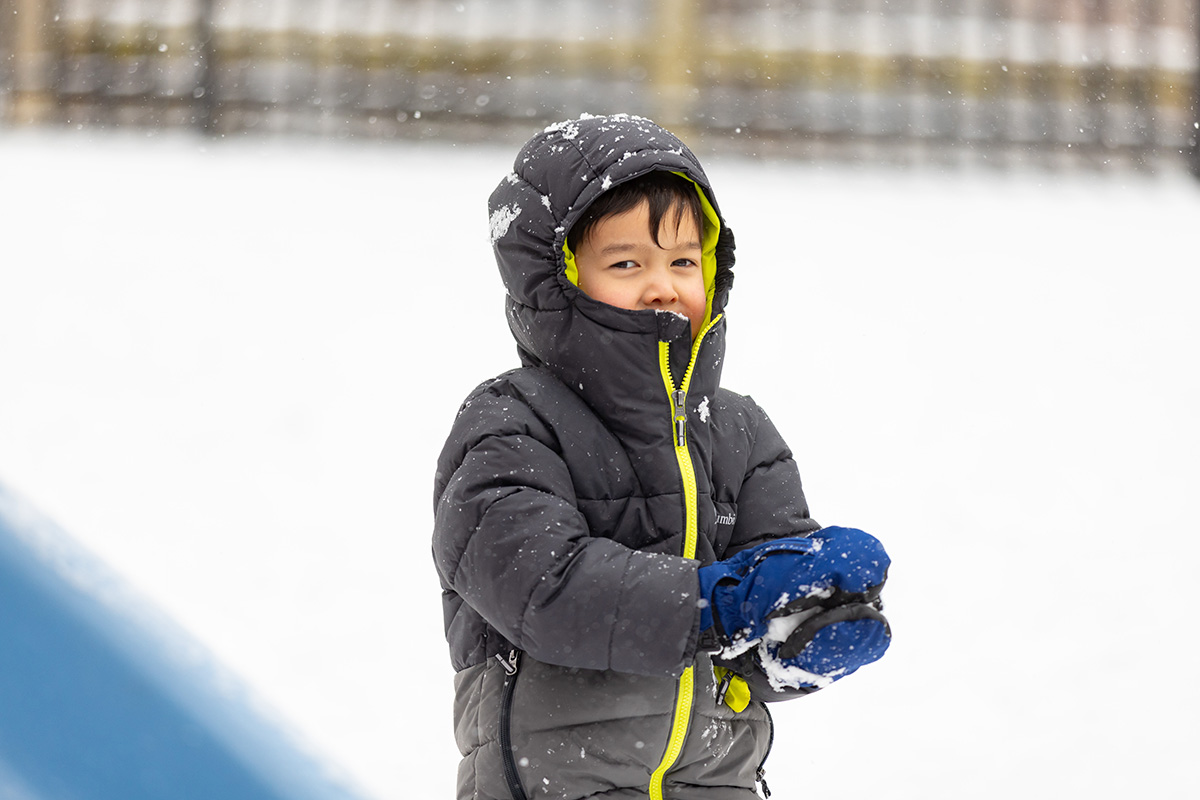
To make winter play last more than five minutes before the cold/wet meltdown occurs, dress your little one in layers. Not like poor Randy in A Christmas Story (“I can’t put my arms down!”), but in at least one more layer than what you wear.
- Base layer: Long underwear or leggings and a long-sleeve shirt, ideally made of wool or a synthetic fabric that wicks away moisture. Cotton holds sweat and can leave kids feeling chilly.
- Middle layer: A fleece or warm sweater for insulation.
- Outer layer: A waterproof, windproof coat and snow pants.
- Accessories: A hat that covers the ears, waterproof mittens, warm socks and waterproof boots. A neck warmer or snood is safer than a scarf for young kids.
A car seat safety tip: Never put your child in their car seat wearing bulky winter clothes. They can wear their coat outside, but it must come off before getting buckled. After they’re safely strapped in, they can wear their coat backwards or use a cozy blanket for the ride.
How Cold Is Too Cold for Kids to Play Outside?
Wind chill matters more than the temperature alone because when the wind chill is too low, frostbite can happen. Check your state or local health department’s website for a wind chill chart to help you plan your time outside.
When you’re outside, even if the wind chill isn’t too bad, take regular warm-up breaks, and come inside if your child’s clothes get wet. Watch out for signs of:
- Frostbite — Skin on extremities (fingers, toes, ears, nose, cheeks) looks pale, gray or blistered or feels numb or tingly
- Hypothermia — Shivering, slurred speech, clumsiness or unusual sleepiness
If you notice any of these signs, bring your child inside right away, remove wet clothing and warm them up gradually. Call your pediatrician or seek emergency care if symptoms are severe or don’t improve.
Winter Outdoor Activities for Kids
Make snow trails. Head out into the snow and make some trails! Use shovels or your hands and feet to create paths. Build a snowy obstacle course, play follow the leader, write your names or stomp out designs together.
Bring sand toys into the snow. Sand toys serve a new purpose in winter! Bring out sand toys, old kitchen containers and utensils to create anything in the snow. Build forts, sculpt creatures or see who can build the tallest tower. Turn your mud kitchen into a snow kitchen so your child can serve up some chilled delicacies (like frozen mud pies, mmmm.).
As children experiment with different containers and tools, they’re exploring early science and engineering concepts, like which molds hold their shape better or how best to build a tower that won’t topple.
Try a “will it freeze?” science experiment. Gather a few household items that can safely be left outside in the cold, like a plastic cup of water, a bouncy ball and a wet washcloth. Then:
- Talk about what might happen if you leave the items outside for a few hours or overnight.
- Write down your child’s predictions (or have them draw pictures).
- Leave the items outside for the set amount of time.
- After the time is up, go see what happened.
- Revisit your predictions. Were they right? Why or why not?
Keep the science going by asking open-ended questions like “How could we unfreeze them?” or “What else could we test?”
Build an animal den. Ask your child where people and animals go when it gets cold. Talk about what materials in nature might help keep animals warm in winter. Then head outside to collect materials and build a den for animals. It’s a great way to help your child think about the natural world and how we share space and resources with animals. (Only collect materials that have already fallen. Leave real nests and burrows undisturbed.)
Cold Weather Activities Without Snow
No snow? No problem. There are still fun things you can do outside:
- Go on a frost hunt. On cold mornings, look for frost on grass, leaves and windows. Use a magnifying glass to closely observe the tiny crystals.
- Make ice suncatchers. Fill a shallow pan with water, add leaves, berries or pinecones, place a loop of string in the water, and leave it outside to freeze overnight. Hang your creation from a tree.
- Watch your breath. On cold days, kids love seeing their breath materialize. Pretend to be dragons and talk about why it happens.
- Feed the birds. Hang a bird feeder and keep a list of the winter visitors you spot. (Make your own using a pinecone, nut/seed butter and bird seed.)
When your cheeks and noses get rosy and you’re not sure if you can feel your toes, head inside to warm up. Change out of any damp clothes, curl up under a blanket and enjoy a warm drink while you talk about all the cool things you did together.
Frequently Asked Questions
Is it okay for kids to play outside in cold weather?
Yes. Playing outside in cold weather is safe and beneficial for children when they’re dressed in warm, dry layers. Take breaks to warm up and stay inside when wind chills are dangerously low.
How cold is too cold for kids to play outside?
Pay close attention to the wind chill. If it’s too low it can cause frostbite. On very cold or windy days, keep outdoor time short or consider staying inside.
How should I dress my child for cold weather?
Dress young children in one more layer than you’re wearing: a moisture-wicking base, a warm middle layer like fleece and a waterproof coat and snow pants. Add a hat, waterproof mittens, warm socks and snow boots.
Should kids wear winter coats in car seats?
No. Bulky coats prevent straps from fitting snugly. Buckle your child in wearing thinner layers, then place their coat or a blanket over the straps.