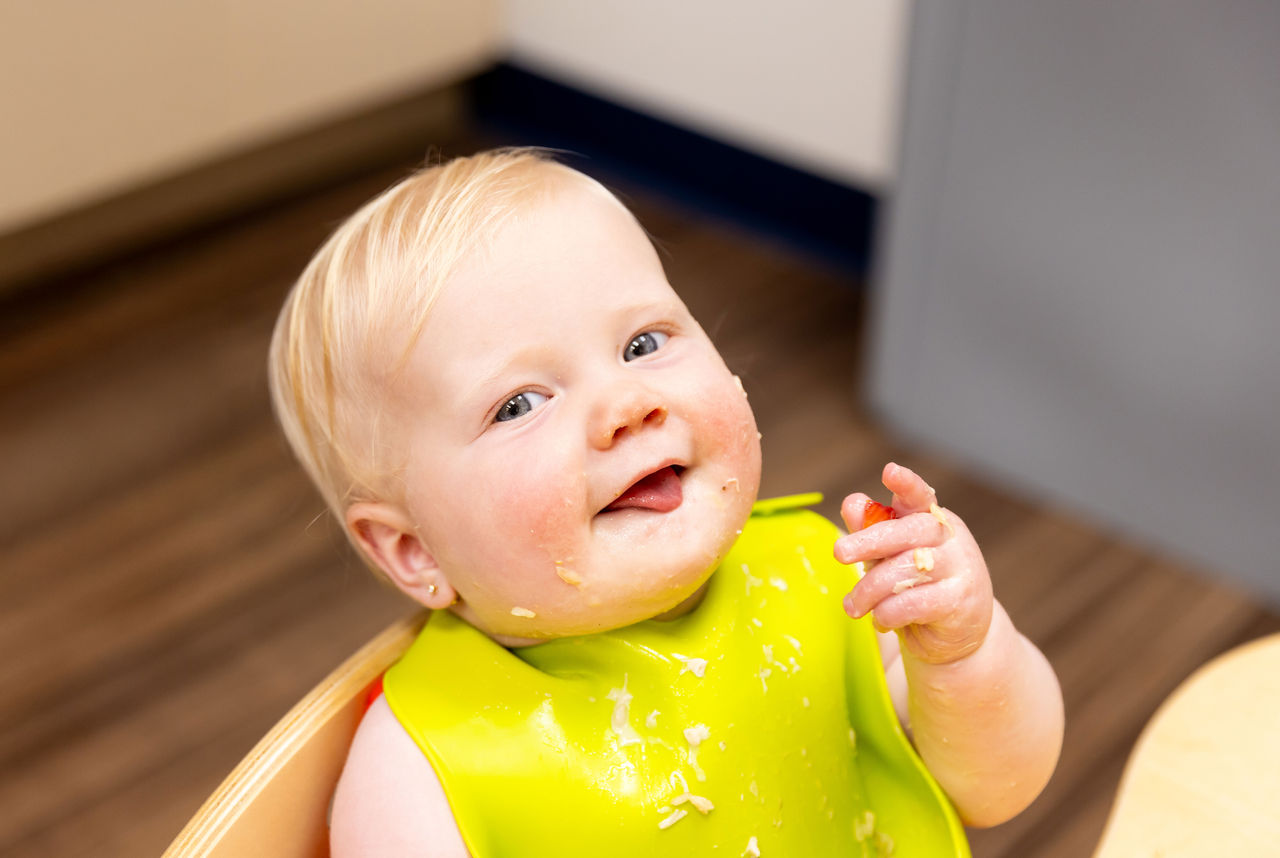
No one prepares you for one of the hardest parts of modern-day parenting … feeding your children. It usually starts out great. You get to introduce your 6-month-old to foods and learn more about what they like and dislike. But then between 18 months and three years, your child who willingly ate almost anything refuses even their favorite foods. As frustrating as this can be, it’s also a normal part of early childhood development that our toddler daycare teachers see every day.
The Why Behind Picky Eating
Around 18 months, often when children start a preschool for 2 year olds program, they experience significant developmental changes. They’re learning to assert their independence and explore the world around them, which often includes wanting more control over their food choices. It’s not defiance; it’s the same autonomy that makes potty training support matter at this age. Just like they might say “no” to putting on shoes or going to bed, they’re also discovering they can say “no” to certain foods.
Young children’s taste buds and sensory system are also still developing. Foods with strong flavors, unfamiliar textures or new appearances might feel overwhelming to them. Additionally, during this time frame, your toddler’s growth rate slows significantly, which means their calorie needs aren’t as high as they were during infancy. This means their appetite might decrease, making them seem pickier.
Strategies to Help Picky Eaters
Let Them Play With Their Food
Yes, we’re encouraging kids to play with their food! It helps them become familiar with how food looks, feels and smells before they’re expected (or ready) to taste it. Letting your child explore food with their other senses by squishing, poking or building makes the experience feel less intimidating.
As your child investigates food with their senses ask them to describe the color, texture and smell. Show them an avocado (peeled and unpeeled) to see how it changes. Have them compare the squishiness of a strawberry versus a cooked carrot. Not only is this fun, but it also allows children to get comfortable with food at their own pace. Encourage them to get curious. Build with celery sticks or paint with potatoes to make food exploration fun.
Use Gentle, Repeated Exposure
Let go of your expectations. Introducing new foods doesn’t mean your child will eat them right away. Repeated exposure — 15 times or more — is key. The trick is to offer new foods consistently, without pressuring your child to eat them. Put a small portion of new food on their plate alongside a familiar one or let your child help prepare dinner. If they get upset at the sight of the new food, remind them that they don’t need to eat it.
Over time, kids will go from looking at it to touching, smelling and tasting it when they’re ready. Each step counts as important progress!
Respect Their Appetite and Autonomy
Children are incredibly in tune with their bodies and can tell when they’re hungry or full. Trust their natural hunger cues by offering a variety of food at mealtimes but let them decide how much to eat. Forcing them to eat more or clean their plate can create a negative association with eating, disrupt their hunger cues and lead to mealtime power struggles.
Instead, create a relaxed environment where your child feels safe to explore and experiment. You can say things like, “It’s okay if you’re not ready to eat this right now. Maybe next time!” This helps your child build confidence and trust in themselves and their relationship with food.
Make Food Look Fun
Sometimes the key to encouraging a picky eater is all in the presentation! Simple tweaks like serving fruits and veggies in fun shapes or adding sprinkles (rainbow sprinkles or chia seeds) to yogurt can make new foods more approachable. Your little one may also enjoy dipping their food. Serve hummus, ketchup or honey alongside meals to see what piques their interest.
Model Positive Eating Behaviors
Children learn a lot by watching the adults around them. Eat meals together as a family whenever possible. When your child sees you enjoying a variety of foods, it may help them feel more adventurous.
As you’re eating, instead of making comments like, “You’ll like this,” which may feel like pressure, you can say things like, “Mmm, I really love the crunchiness of these peppers!” Descriptive comments about textures, colors or smells give children a neutral way to learn about food.
Create a Routine
Sometimes, picky eating can be tied to a lack of routine. Kids won’t be hungry for dinner at 5 PM if their last snack was at 4 PM. Not only are they not hungry, but they’re less willing to try new food. Establishing a consistent routine around meals and snacks helps children feel more secure and allows them to listen to those important hunger cues.
Things to Avoid with Picky Eaters
Don’t Force or Pressure Them to Eat
It’s tempting to say, “Just take one bite!” or “You need to eat all your vegetables before dessert.” However, pressuring children to eat often backfires. It teaches them to ignore their internal hunger cues and can put certain foods on a pedestal. Instead, continue offering food in a low-pressure way. Research shows that children are more likely to accept new foods when they feel in control of their choices.
Don’t Label Foods
Children pick up on the language we use, so it’s important to avoid labeling foods as “healthy” or “junk.” Labels create unintentional judgments and reinforce the idea that some foods (or some children!) are inherently good or bad. This can lead to guilt or shame around eating. Use neutral language because food has no moral value.
Don’t Make Separate Meals for Your Child
When your child refuses the meal you’ve prepared, it can be tempting to make something you know they’ll eat. Cooking separate meals can limit their willingness to try new foods. Offer a variety at each meal and always include at least one safe food. Eating together and serving family-style meals (where everyone can help themselves) are great ways to help your child feel more comfortable with food.
Don’t Use Food as a Reward or Punishment
It’s common to hear things like, “If you finish your dinner, you can have dessert,” but this creates a hierarchy where dessert is a prize. Using food as a reward or taking it away as a punishment can create an unhealthy relationship with certain foods. Instead, serve dessert alongside their meal. Will your child eat that first? Probably. But they will also eat the other food, too!
Don’t Express Disappointment or Frustration
Kids are highly attuned to their caregivers’ emotions, and they can sense when you’re feeling frustrated or disappointed. Statements like, “I worked so hard on this meal!” or “You never eat what I make!” can unintentionally put pressure on them and make mealtimes feel tense. Respond with empathy and say something like, “I see you’re not feeling up to trying the carrots today. That’s okay. We’ll try again another time.”
When Picky Eating May Be Something Else
Most picky eating resolves around age four, but there are times when it can last longer than expected. Children with allergies, sensory processing disorder, autism and ARFID (Avoidant Restrictive Food Intake Disorder) may have a tough time with food. Talk to your child’s pediatrician about picky eating if your child:
- Experiences emotional distress during mealtimes
- Is losing weight or not gaining any
- Eats fewer than 20 foods
- Has strong reactions to texture, taste or smell
- Develops aversions to foods they used to love
Approach Mealtimes with Compassion
Picky eating doesn’t last forever, and with a little patience and creativity, you can help your child expand their palate over time. Approach mealtimes with curiosity and connection. It’s not about getting them to love everything today, but about cultivating a lifelong, healthy relationship with food.