Back-to-school season is upon us! It’s the time of year when lunchboxes are shiny, shoes still have both Velcro straps and parents are trying to survive drop off without crying in the parking lot. If you're navigating the transition from summer to school and are feeling nervous, here are some great tips to help make the transition less stressful for everyone.
Explore the new school. Before your child’s first day, visit the school. Show your child where they'll play, eat and (hopefully) nap. Introduce your little one to their teachers and other staff members that they’ll see regularly. Familiar places feel safer, and safety builds confidence.
Read about school. Books are incredible teaching tools for young children. Pick up books like:
- Llama Llama Misses Mama
- The Kissing Hand
- Time for School, Little Blue Truck
- Bye-Bye Time
- All Are Welcome
- The Day You Begin
Practice makes predictable. Kids thrive on routines, and summertime may have shaken their usual one up. Start adjusting your schedule a couple weeks in advance, including bedtime, wake-up time and lunch and snack times. Play pretend with your child to practice saying goodbye in the morning and hello again in the afternoon. Playful practice will help make the real thing a little less scary.
Get back in the routine groove. Start simple rituals like picking out clothes the night before, talking about what to expect the next day or packing lunch together. Kids love to help and this is another great way to create school routines.
Create a visual schedule. Use pictures for each part of the day: wake up, get dressed, brush teeth, eat breakfast, go to school, etc. A visual schedule will help your little one understand what comes next in their day, providing a sense of security and predictability.
Talk it out. Ask how your child feels about starting school. Excited? Nervous? Wondering if any of their classmates will be dinosaurs? Naming emotions is the first step in managing them, so let them share and meet them with calm reassurance. For example, you might say: “You’re feeling a little nervous? That makes sense. I get nervous before something new too. But remember how you were nervous before your last swimming lesson, and now you love it?” You can also encourage your child to draw or talk about what they’ll do at school. Imagining the day, whether it’s morning meeting or snack time, helps give your child a sense of control.
Build social confidence. Read books about making friends. Plan playdates if you can. Depending on your child’s age, you can talk about what makes a good friend. Use pretend play to help your child understand tough concepts like taking turns, sharing and inviting others to play. If they’re old enough, you can play games like Candyland or Hi Ho! Cherry-O together, which will also help them learn how to win and lose graciously.
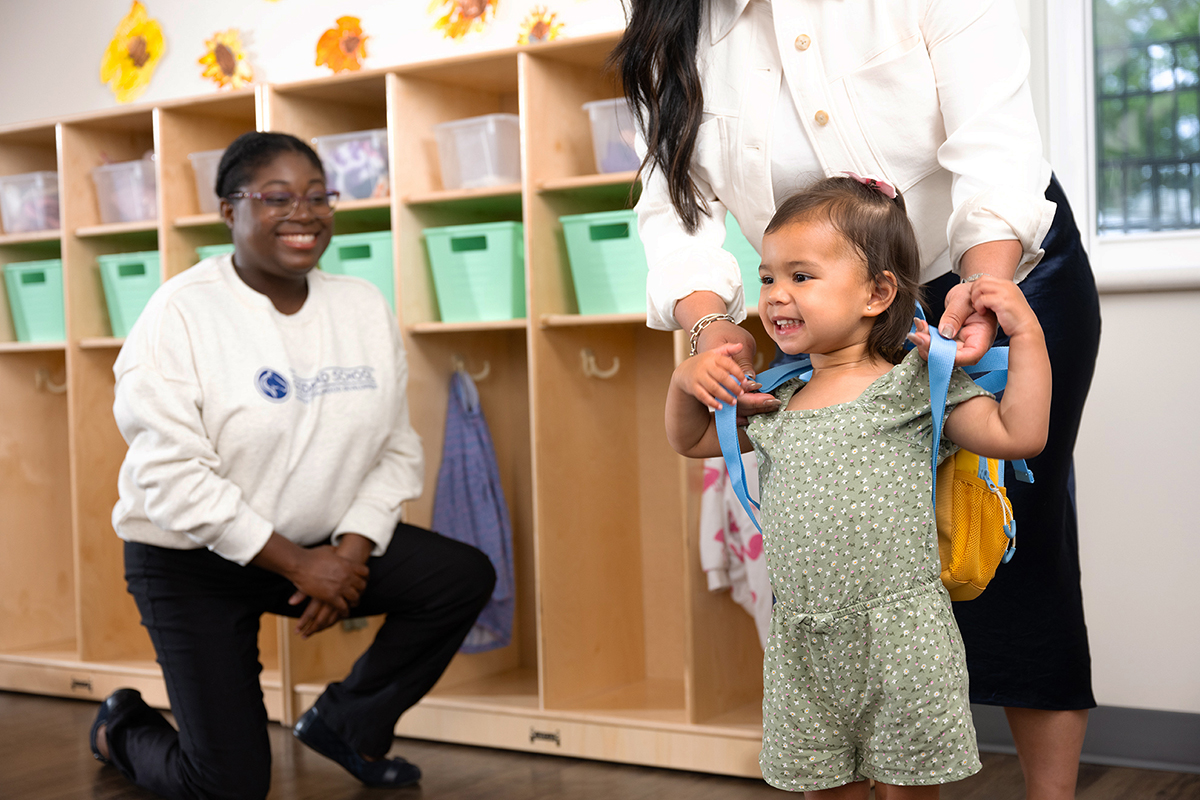
Don’t sneak out. It’s tempting to disappear quietly at drop off, but resist. Always say goodbye with love, then leave confidently (even if you don’t feel confident). Kids take emotional cues from you. Try creating a goodbye ritual, whether it’s as simple as a big hug and “see you later,” or making silly faces or secret handshakes.
Let go of perfection and breathe. There may be tears. Yours or theirs (likely both). That doesn’t mean you’ve failed drop off. It means you’re human and they’re adjusting. School transitions are a process, not a one-and-done moment. Transitions aren’t just for kids. Your feelings matter, too. Try to stay positive, calm and grounded. If you’re anxious, they’ll notice. If you’re confident, they’ll lean on that. If you need to ugly cry in the car after drop-off, well, we’ve all done it!
Starting school is a big deal. It’s exciting and can be a little scary. With some prep, patience and compassion, your child will not only adjust but grow in ways that might surprise you. And eventually you won’t even need tissues at drop off!