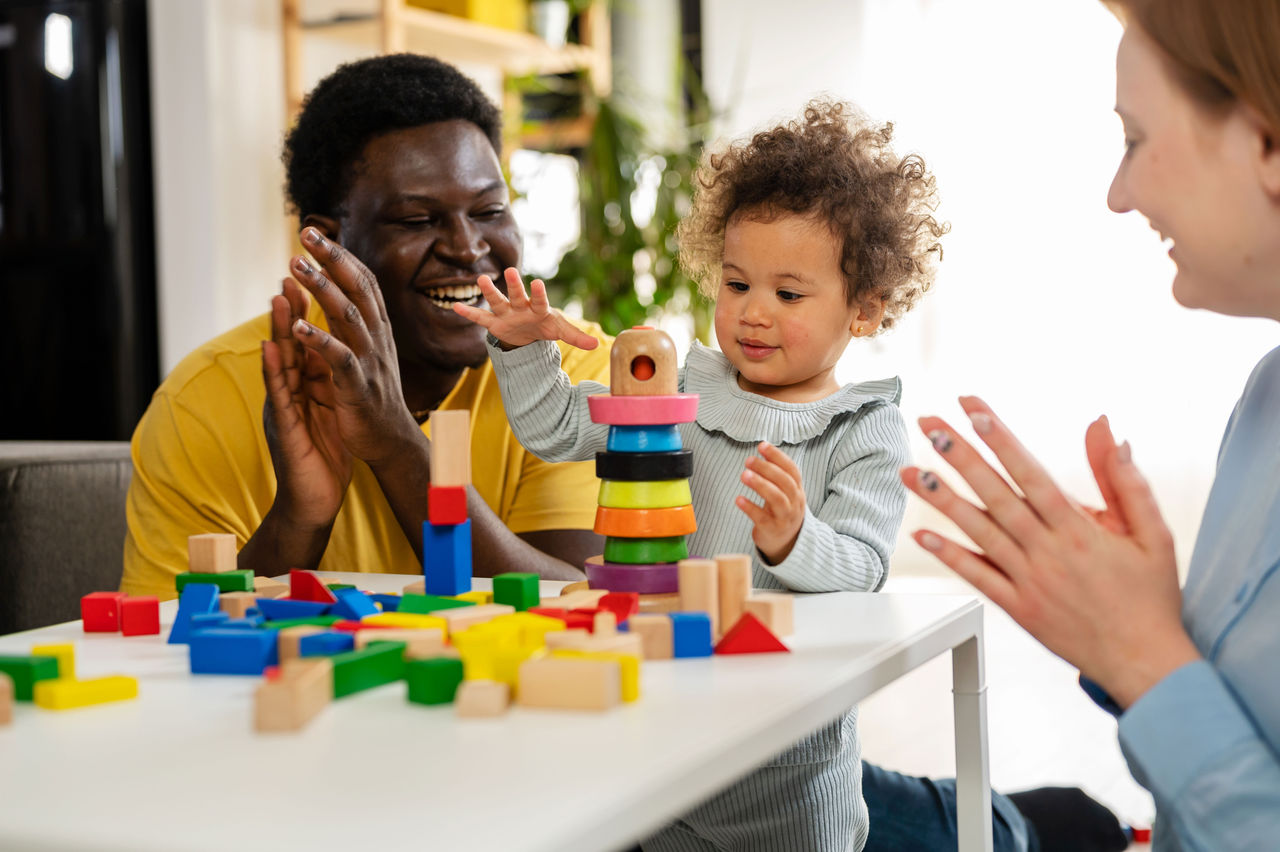
Your child is learning all the time and not just at school, but at home, too. That’s why strong connections between home and school are so important. When you sing a song they’ve sang in class or ask about something specific they explored during the day, you’re reinforcing what they’ve learned and helping them feel excited to keep learning.
Our Wonder of Learning® framework makes it easy to stay connected to what your child is learning. Each School explores the same Unit of Inquiry over several weeks, guided by weekly questions designed to invite curiosity and discovery. For example, Unit 4 is all about “Comparing Simple Machines: How might we use these in our everyday life?” Week 1’s question is: How do people get from place to place?
From infants to Pre-K, each age group explores the same idea in their own way, which gives you a window into their world and easy ways to bring learning home.
Here are some examples of what might happen in a class at each age level during Unit 4, Week 1.
Infants (0 – 12 months). Infants will focus on their rapidly developing body awareness and ability to control movements. Teachers will support their growing awareness by singing songs and observing movements in the mirror. One song from this week is, “This Is How I Move My Body” (to the tune of “Here We Go Round the Mulberry Bush”).
What children are learning (learning domains):
- Gross motor skills
- Fine motor skills
- Building relationships with adults
- Listening and comprehension
- Phonological awareness
- Music
- Movement
- Knowledge of self and others
Toddlers (12 – 24 months). Toddlers will consider walking as a form of transportation. Teachers will provide opportunities to practice this developing skill and strengthen their coordination. This week, they will place poly spots on the floor and talk to children about the ways they choose to travel from spot to spot. Maybe they could hop like bunnies to one spot or flap their wings like birds to another.
What children are learning (learning domains):
- Initiative and planning
- Gross motor skills
- Building relationships with adults
- Experimenting, predicting and drawing conclusions
- Knowledge of self and others
Twos (2 – 3 years). Twos will begin to integrate their knowledge of the world into their play. Their play at this stage is parallel play (alongside other children instead of with them). Teachers will offer materials related to transportation so they can play what they know about how people get from place to place. This week, they will put photos of each child on car figurines for play. Children can use blocks to build structures if they choose and drive their cars to homes or places.
What children are learning (learning domains):
- Initiative and planning
- Problem solving with materials
- Reading
- Geometry: Shapes and spatial awareness
- Building relationships with other children
- Fine motor skills
- Experimenting, predicting and drawing conclusions
- Knowledge of self and others
- Pretend play
Bridge (2.5 – 3.5 years). In the Bridge classroom, children expand their knowledge through deeper and more sustained play by moving toward cooperative play. This week, teachers will intentionally support children’s expanding vocabulary and deeper social interactions while they engage with dramatic play props of babies and various baby carriers.
What children are learning (learning domains):
- Initiative and planning
- Problem solving with materials
- Geometry: Shapes and spatial awareness
- Speaking
- Building relationships with other children
- Gross motor skills
- Knowledge of self and others
- Pretend play
Preschool (3 – 4 years). Preschoolers are tuning into environmental print to gain more information about their surroundings. This week, children are looking at the print associated with vehicles such as license plates and street signs. They will play a letter-matching game where they park vehicles in spaces with the matching letter.
What children are learning (learning domains):
- Initiative and planning
- Problem solving with materials
- Alphabetic knowledge
- Geometry: Shapes and spatial awareness
- Building relationships with other children
- Observing and classifying
- Pretend play
Pre-kindergarten (4 – 5 years). Pre-kindergartners are going deeper into the world of problem-solving and investigating how vehicles can travel when there is a body of water they need to get across. This week, they will use various materials to build bridges.
What children are learning (learning domains):
- Initiative and planning
- Problem solving with materials
- Building relationships with other children
- Fine motor skills
- Experimenting, predicting and drawing conclusions
- Pretend play
- Tools and technology
How to Connect It All at Home
Here are some fun ways to connect learning at home:
- Sing with your child! Look for titles of songs in communication from your School that you can continue at home. If you aren’t sure about any of the tunes, ask your child’s teacher.
- Head to your local library and look for books associated with the overarching topic from the unit of inquiry.
- Provide small figurines or stuffed animals so that children can play out what they are learning through pretend play at home.
- Send pictures to School via the Goddard Family Hub when your child connects with something they are learning.
- Listen to the vocabulary that emerges at home and reflect on any pictures shared from School. Follow your child’s lead and ask questions about the ideas they are bringing up.
- Offer art materials so that children can freely practice or express ideas and concepts they are learning at School.
- Let your child see you write ideas down on paper or capture your child’s ideas as they voice them.
Whether you're asking about their day, reading books or exploring inquiry questions at home, you’re showing your child that their learning matters. The home-to-school connection is more than a bridge between two places; it’s a partnership that supports your child’s development in meaningful ways.