Attachment theory is a hot topic, particularly among Millennial and Gen Z parents who are working hard to break generational trauma. Attachment theory is deeply connected to another popular topic: parenting styles. That’s because your parents’ parenting style impacted your attachment style. And your attachment style likely influences your current parenting style, but it doesn’t always have to. Choosing how you want to parent becomes a mix of your life experiences, instincts and those moments where you realize “I sound just like my parent” (for better or worse). The good news is, you get to choose how you show up for your kids, and understanding the four main parenting styles will help your family reflect on an approach and make intentional choices that support healthy development. Whether you lean toward one style or blend several, exploring each one offers meaningful insight into how children grow and flourish.
The Four Parenting Styles
Developmental psychologist Diana Baumrind identified three primary parenting styles in the 1960s, which later became four, as noted by researchers Eleanor Maccoby and John Martin. These styles are defined by two key factors: how responsive a parent is to their child’s emotional needs and how demanding they are in terms of rules and expectations.
Authoritative Parenting
Authoritative parenting (highly responsive and highly demanding) is widely regarded as the most effective approach for supporting healthy child development and attachment. Authoritative parents set clear expectations while remaining warm, responsive and open to communication. They explain the why behind rules, validate their child’s feelings and encourage age-appropriate independence. These parents set and keep boundaries, which kids need to thrive. Children raised with this style tend to develop secure attachment, strong self-regulation, confidence and social skills.
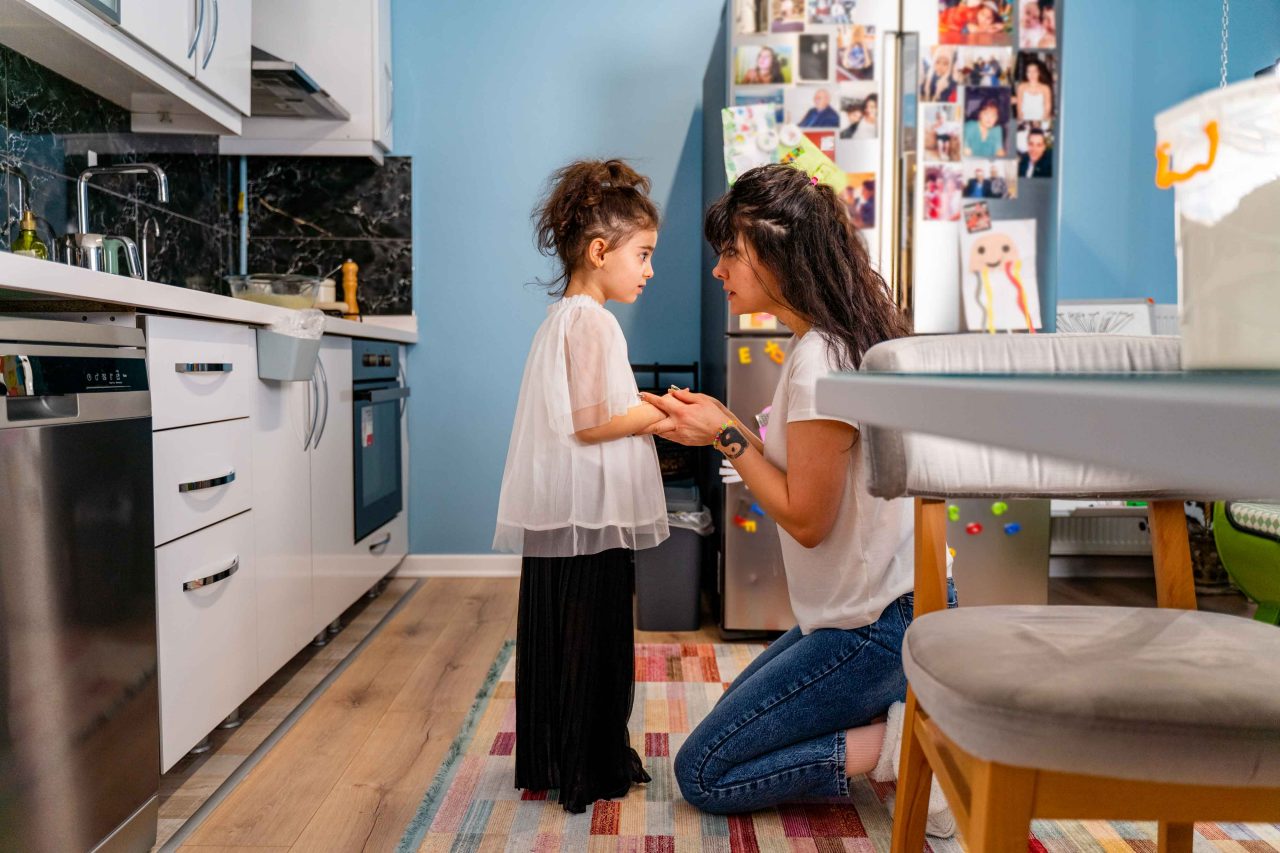
Example: Your child is melting down at the grocery store because you said they couldn’t have any cookies. You get down on their level (which might be crouching on the floor) and validate their feelings. “You’re upset because I said we can’t get any cookies. I know you’re disappointed.” You stick to the boundary and don’t get cookies while comforting your little one.
Authoritarian Parenting
Authoritarian parents (low responsiveness, highly demanding) prioritize obedience and discipline, often with strict rules and little room for discussion. While this style establishes clear structure, it can limit a child’s ability to develop autonomy and internal motivation. Children in authoritarian households may follow rules out of fear rather than understanding, which can affect their confidence and decision-making as they grow. Kids raised in these households may develop insecure attachment (either anxious or avoidant), aggression, insecurity and a hard time making decisions for themselves.
Example: Your child hit their sibling. You yell, “You know better than that! Go to your room! And we won’t be reading a book before bed.” Punishment, usually a big reaction, with no empathy or room for discussion.
Permissive Parenting
Permissive parents (highly responsive, low demand) are nurturing and emotionally available but tend to set few boundaries or consistent expectations. While children feel loved and supported, the lack of structure can make it challenging for them to develop self-discipline and frustration tolerance. This style often creates children who are creative and expressive but may struggle with following rules in school settings. Permissive parenting is often confused for gentle parenting, but gentle parenting is aligned with the authoritative style.
Example: Back to the grocery story meltdown. Instead of holding firm to the no cookies boundary, you say, “Okay, okay, you can have the cookies.” And this happens often. Whether it’s cookies or 5 more minutes before bed (an hour later).
Uninvolved Parenting
Uninvolved parenting (low responsiveness, low demand) is characterized by a hands-off approach. Parents may be physically present but emotionally disengaged, providing little guidance, structure or care. This style can significantly impact a child’s sense of security and development, leading kids to become self-sufficient out of necessity rather than through nurturing. Uninvolved parenting may be the result of parental stress, mental health challenges or lack of support rather than a conscious choice.
Example: Back to the sibling scenario. An uninvolved parent may not say anything after one child hits the other, leaving the kids to figure it out themselves.
Nature, Nurture and How Parenting Fits In
A child’s development is shaped by both biology and environment. While genetics influence temperament, learning style and emotional tendencies, the caregiving environment plays a powerful role in how those traits unfold. Parenting is one of the most influential environmental factors in early childhood. Warm, consistent and responsive parenting supports healthy brain development, emotional security and the social-emotional skills that children need to grow into the best version of themselves.
How Parenting Styles Affect Brain Development and Child Development Outcomes
Early childhood is a period of rapid brain development, and the quality of parent-child interactions directly influences how neural connections form. Responsive parenting, where caregivers attune to a child’s emotional cues and provide consistent support, helps build the brain’s stress-regulation systems. Children who experience predictable, nurturing caregiving are better equipped to manage emotions, build relationships and approach learning with curiosity and resilience.
Changing Parenting Styles
You yelled at your child before. That doesn’t make you a bad parent. It makes you human. You’re navigating your own emotions while trying to be the parent your child deserves. Thankfully, there’s no such thing as a perfect parent, and if there was, it would be to your child’s detriment. If we never made mistakes, how would kids learn to be okay with messing up? The best thing you can do for your child is be yourself. If you make a mistake, talk about it. If you yell, apologize. Repair after rupture is one of the most important things we can do for kids. Life is filled with teaching moments, and your kids are better off for it.
Parenting is not fixed and neither is your parenting style. Most families naturally adjust their approach as children grow, circumstances change and parents reflect on what’s working. What feels right for a toddler may look different for a teenager. Remaining flexible is a strength, not an inconsistency.
Connecting Parenting Styles to School Readiness
The habits, skills and emotional foundations children develop at home have a direct impact on how they approach learning in the classroom. Children who have experienced warmth and structure at home, where expectations are clear and feelings are validated, tend to transition more easily into the social and academic expectations of early childhood education. Encouraging age-appropriate independence, modeling problem-solving and repairing after a rupture are everyday parenting practices that prepare children for preschool and beyond.
Understanding parenting styles is just one part of supporting your child’s growth and development. Explore The Goddard School® blog for more resources on early childhood development, school readiness and building strong family connections. To find a location near you, visit our School locations page.