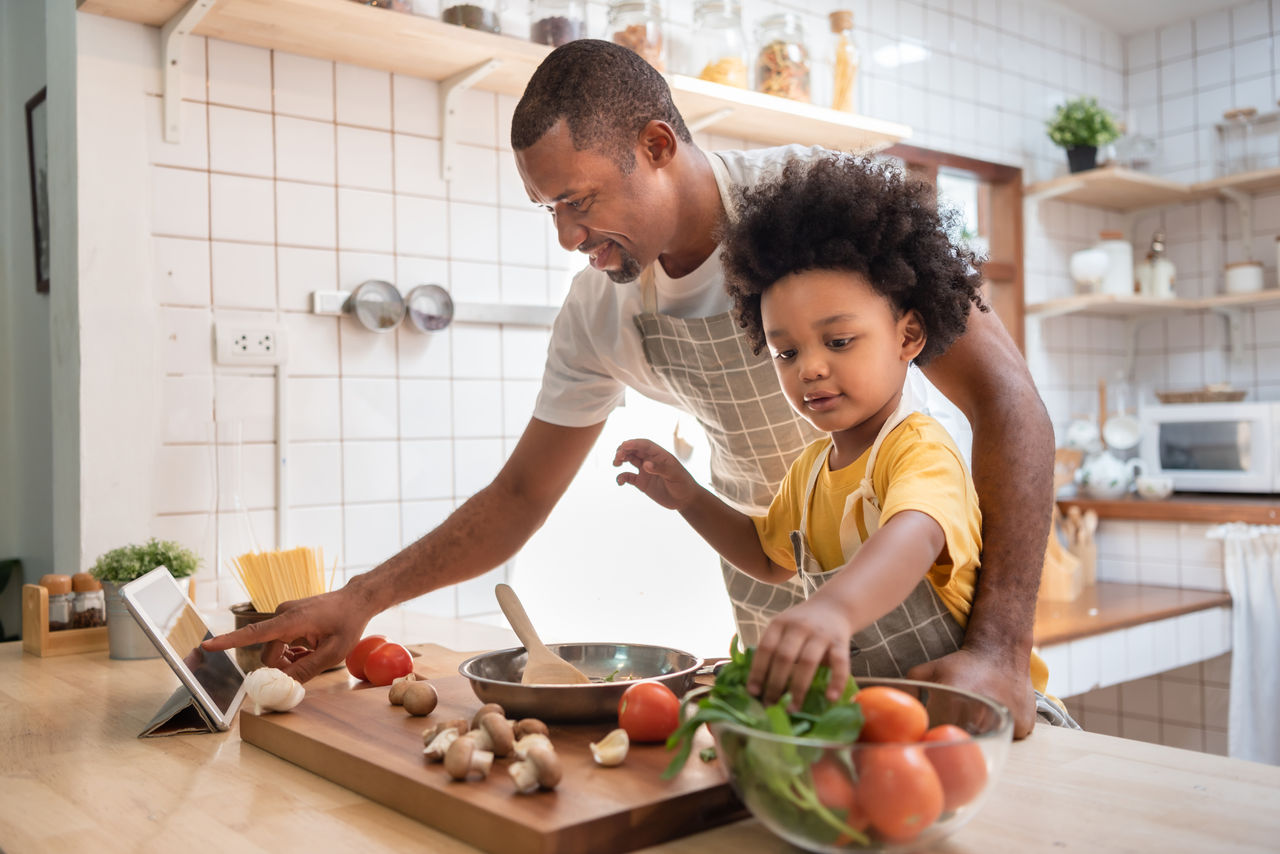
Did you know that involving children in the kitchen has many benefits for their learning? It’s a multi-sensory experience that helps little ones make meaning of their world and build important skills. Some of the things they practice while cooking include patience, regulating their bodies for safety, connecting to family culture, taking risks by trying new things, using math skills by following a recipe, observing science in action, connecting to literacy through written and spoken language and developing fine motor muscles. Invite your child into the kitchen when you cook. When you notice their interest, welcome their curiosity and encourage them to help. Here are some age-appropriate kitchen tips for children at any stage of development.
Infants
- Place your baby in a seat or carrier to allow them to take in the sights, sounds and smells of the kitchen as you prepare food.
- Narrate your process to build their language skills and develop their awareness.
- Include them in safe food exploration — they can touch and smell various fruits or vegetables with your assistance.
- Provide them with a safe cooking tool like a wooden spoon to play with.
- Reinforce health and safety routines early, like handwashing.
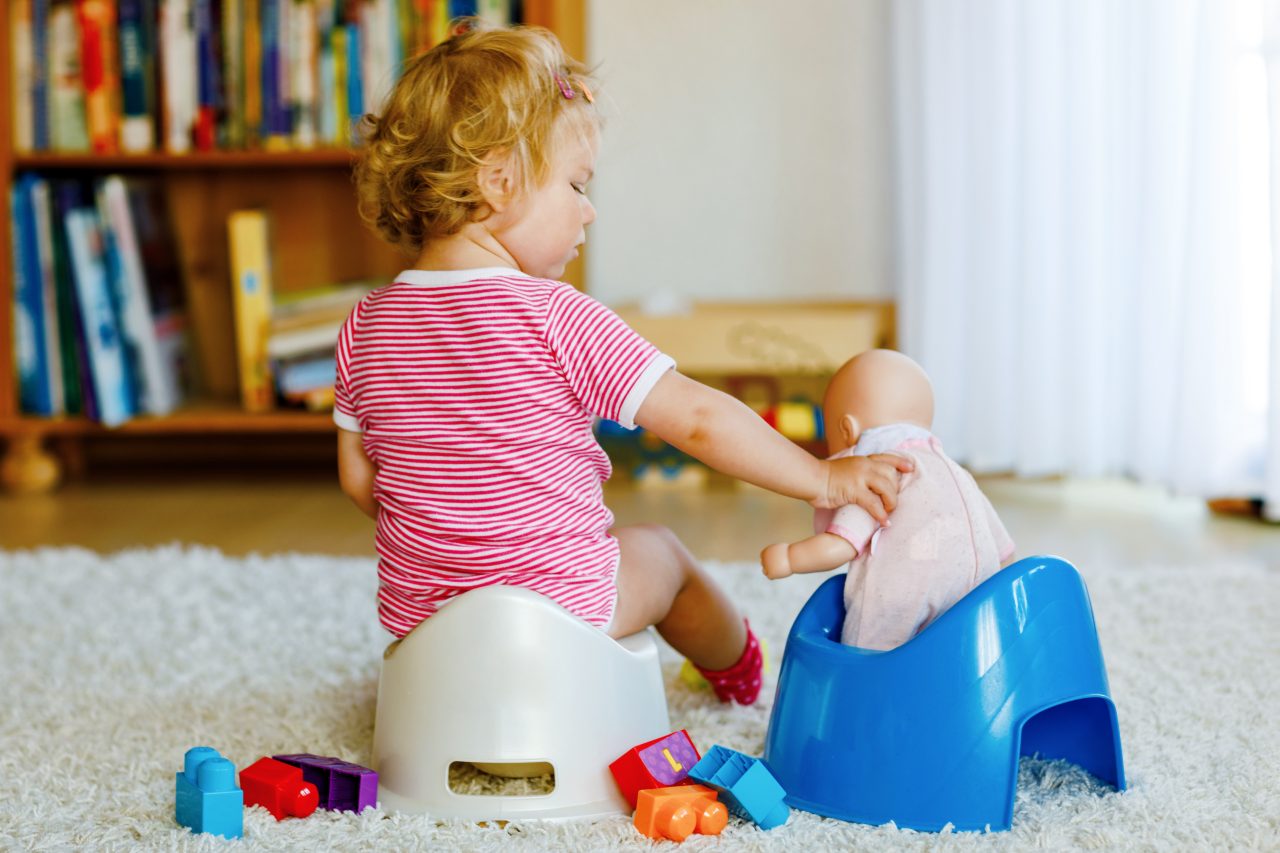
Toddlers
- Set up a stool at the sink so your toddler can rinse and scrub all your fruits and vegetables.
- Discuss colors and shapes of foods as you cook and count how many items you are using (“Look at these two yellow bananas!”).
- Extend their language as they learn new food and kitchen tool vocabulary.
- Reinforce messages about safety as they watch you chop or use the oven to foster their decision-making skills.
- Consider safe cooking materials as a sensory experience and set it up as they “cook” alongside you. For example, give your child cornstarch and water in a bowl and let them touch, stir, whisk, etc.
- Make no-bake recipes like fruit salad to include older toddlers in assembling a recipe.
Preschoolers
- Include them in food preparation they can complete independently like washing apples, snapping beans, ripping lettuce, measuring water or pouring milk.
- Write out a recipe on large paper and add it to the wall to draw attention to measurements and written language. Add pictures of amounts to emphasize quantity and allow your child to count it out.
- When stirring, ask your child to identify a number to count to as they stir to reinforce rote counting skills.
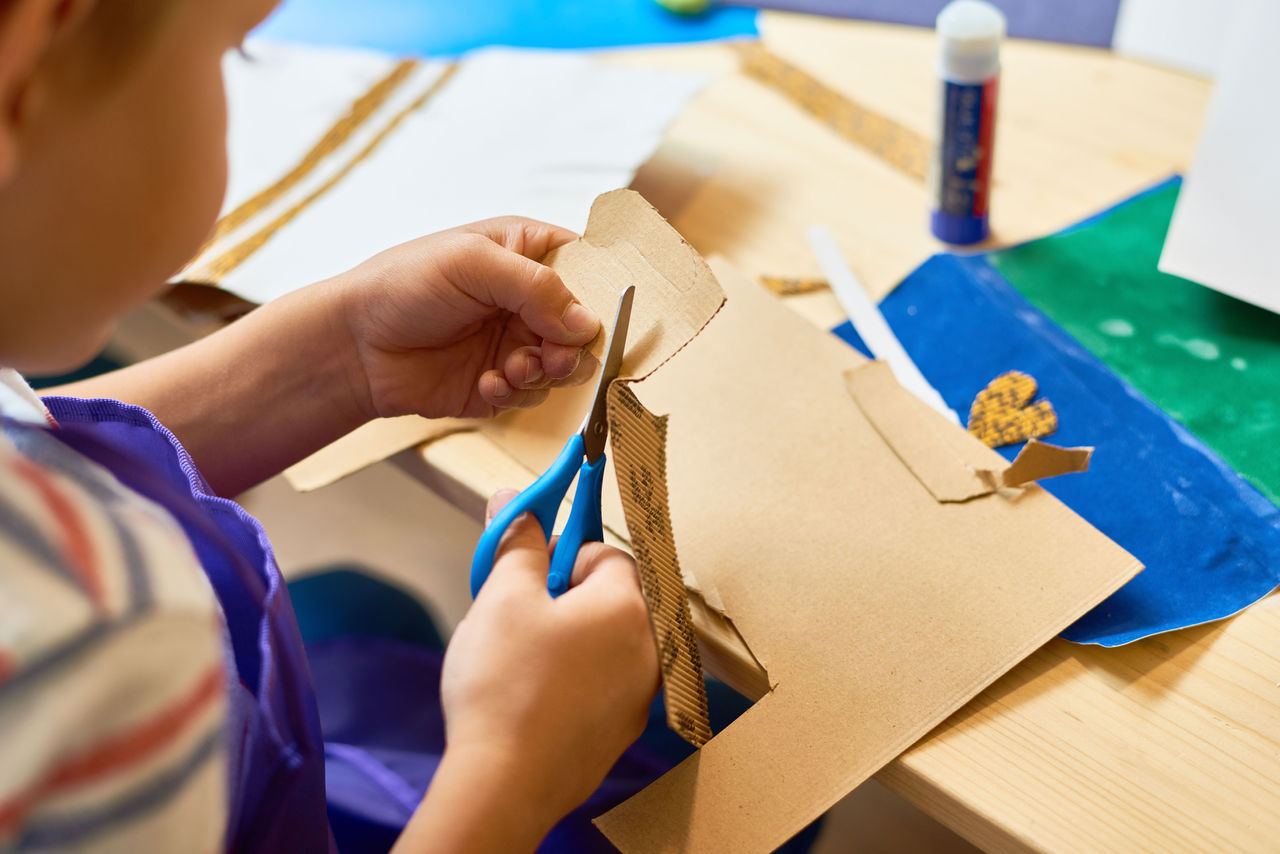
- Strengthen fine motor skills by allowing use of more sophisticated tools like peelers, graters and child-safe knives. These tools will instill a sense of responsibility and independence while reinforcing decision-making skills and sustained attention.
- Notice two- and three-dimensional shapes as you pour from and into various containers.
- Highlight the changes that occur in the cooking process and invite children to make predictions. Make popcorn with a clear air popper and delight in the scientific experience of it all.
Kindergarten/School Age
- Explore the various ways to prepare vegetables with a child-safe knife — dice, chop, slice, etc., and allow children to refine their cutting skills while they determine the best cut for the recipe.
- Allow them to independently measure, pour, whisk, stir, scoop, etc.
- Invite them to share how they think a recipe is created and try theirs out from start to finish. They can make predictions and reflect on their choices and outcomes.
- Ask them to create a menu for the meal. They can use their phonetic (sound) spelling to label their pictures.
Cooking with your child is so much more than making a meal — it’s about connection, growth and creating shared memories. Each moment in the kitchen, whether it’s letting an infant hold a wooden spoon or working with a kindergartener to create a menu, offers an opportunity to nurture their curiosity and independence. When we welcome our children into these experiences, we’re not just teaching them skills; we’re showing them that they’re capable and that we value their help.
So, the next time you’re in the kitchen, pause for a moment and invite your child to join you. Start small, stay patient and focus on being together. These are the moments that build confidence and connection — one ingredient at a time.