Dreaming of the day when your little one is finally done with diapers? Potty training has entered the chat. Get ready for the highs and lows of this journey by understanding signs of readiness, navigating setbacks and staying calm under pressure so you can help your child become a potty pro.
When Should You Start Potty Training
Most children are developmentally ready to begin potty training between 18 months and 3 years old, though the right time varies from child to child. Starting too early, before your child develops the physical control and emotional awareness needed, can lead to setbacks like fear of the potty or holding in pee or poop. Rather than relying on age alone, look for readiness cues. But, before you figure out if your child is ready, you should also determine if you’re ready. It’s an arduous process that can easily get sidetracked. Make sure there are no major changes happening that could cause stress during the process like a move, new sibling or starting daycare.
Signs Your Toddler Is Ready to Start Potty Training
Your child will never say, “I’m ready to be potty trained.” Real readiness is a set of consistent physical, behavioral and cognitive signs. Physically, it’s recommended that your toddler stays dry for at least two hours; walks, sits, stands, and pulls their pants up and down independently; and shows awareness that they need to use the potty (like hiding behind the couch, making direct eye contact and totally not pooping). Behaviorally, look for signs of curiosity about the toilet. Cognitively, your child follows simple two-step directions and communicates when they need to go, whether through words, signs or gestures. Some other readiness indicators include:
- Waking up dry from naps
- Asking for diaper changes/feeling uncomfortable in a messy diaper
- Having a predictable poop schedule and fewer diaper changes
When several of these signs appear together, it’s a good indicator that potty training can begin.
How to Approach Potty Training
Once you’ve identified readiness, a structured but flexible approach works best. Remain calm and encouraging and remember that accidents will happen.
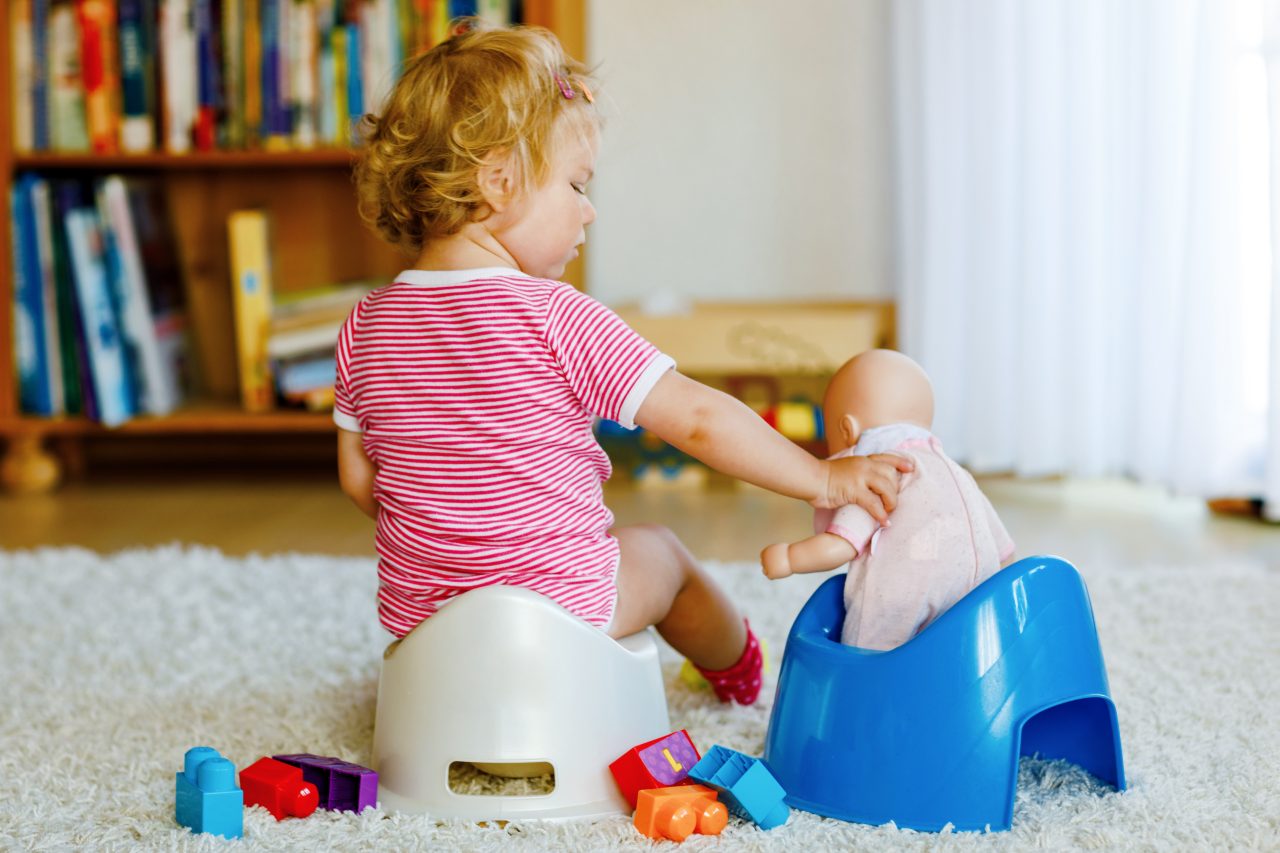
- Introduce the potty without pressure. Read books about going potty and let your child explore a training toilet or seat insert at their own pace. Start by having them sit on it fully clothed to create familiarity not fear. Let them watch you go to the bathroom and allow them to flush the potty and wash their hands with you.
- Establish a regular bathroom schedule. Prompt your toddler to try the potty after meals, before naps and before bedtime. Routine removes the guesswork.
- Use simple, consistent language. Choose the same words every time to describe what’s happening like potty, peepee and poop. Don’t use language that sounds negative like stinky or yucky.
- Praise every attempt. Celebrate effort, not just results. Enthusiastic praise for trying—whether or not anything happens—keeps toddlers feeling motivated without creating pressure.
- Transition to training pants. Once your child is using the potty consistently during scheduled times, swap diapers for training pants during the day.
- Loop in caregivers and teachers. Share your schedule, language and approach with everyone caring for your child. Consistency is one of the biggest factors in how quickly training clicks.
Different Potty-Training Methods
This may be the most overwhelming part of potty training. There are so many different methods, but the only one that matters is the one that works for your family.
Child-led. This option is all about your child’s readiness, which means waiting until they can communicate, stay dry for a while and understand routines. How it works:
- Introduce a potty chair gradually. Put one in every bathroom and let your child explore it. Encourage them to sit on it first fully clothed, then eventually without a diaper.
- Let your child lead while you use tactics like storytelling and gentle reminders to discuss bodily functions and potty time. Explain how to tell when your body needs to go.
- Use positive reinforcement, not pressure or punishment.
Three-day. This method requires you to clear your schedule for three days to focus on getting out of diapers. How it works:
- Around age two, throw away all diapers (except for nighttime). Let your child be naked from the waist down or wear big kid underwear.
- Watch for your child’s potty signals and catch them before they start to go by calmly rushing them to the bathroom.
- Be prepared for lots of accidents. Even if they’ve started going potty, hurry them to the bathroom so they can finish on the toilet.
- You must stay calm even as accidents happen on your carpet. If you show signs of annoyance or frustration, the method can quickly backfire.
Parent-led. As the name states, this is a method on your time. How it works:
- Set a timer every two hours. When the timer goes off, have your child sit on the potty.
- Encourage your child to sit on the potty after meals, before and after naps and at bedtime.
- Limit their time on the potty to five minutes.
- Praise them for trying!
How to Handle Potty Training Regression
Accidents happen. Regression is a common, albeit discouraging, part of potty training. It most often occurs in response to a change in routine or environment, such as a new sibling, a move, illness or starting school. The best thing you can do during regression is to stay calm, avoid shame or punishment and keep up your usual potty routine. Revisit the basics: consistent scheduling, positive reinforcement and plenty of patience. Regression is almost always temporary. Don’t resort to using diapers, unless there’s a medical reason.
Night Training: What’s Different About Staying Dry Overnight
Daytime and nighttime dryness are controlled by different developmental processes, so many children achieve daytime training months (or even years) before they’re consistently dry overnight. Nighttime training depends on hormonal maturation that affects how much urine the kidneys produce during sleep, and this is largely outside a child’s conscious control. It’s recommended to wait until your child wakes up dry consistently for at least a week before removing overnight protection. In the meantime, keep expectations realistic: daytime success is a major milestone worth celebrating!
Supporting Potty Training as a Team: Parents and Caregivers Together
Children do best with consistent expectations from every adult in their life. Whether training is happening at home, at a relative’s house or at daycare, caregivers should use the same words, routines and calm, positive responses to accidents. Goddard School teachers are potty training pros who will work closely with your family to keep the process consistent. If you’re struggling with potty training, talk to your child’s teachers. They’ll likely have some great tips and tricks!