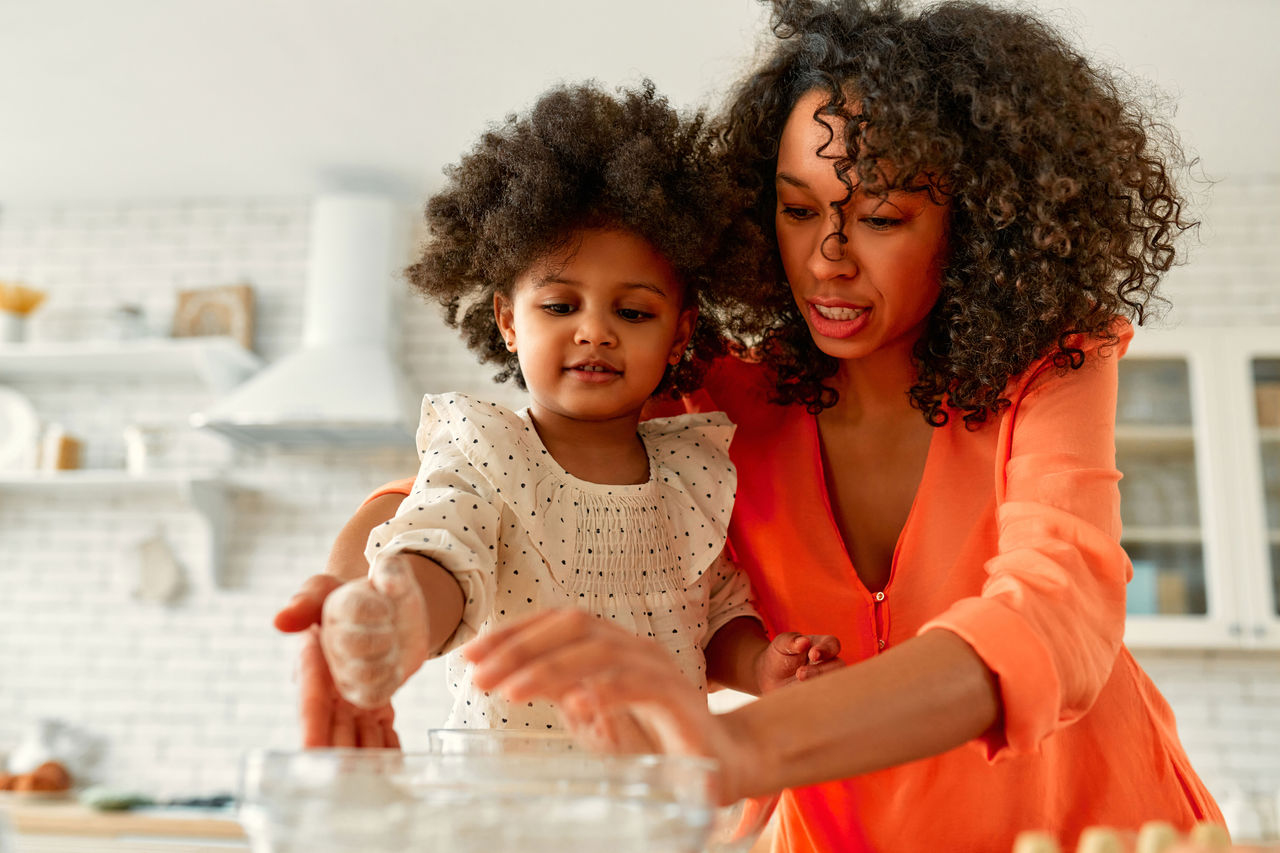
Picture this in your kitchen: Flour’s on the floor, the air tastes like you’re in Willy Wonka’s candy factory, eggshells are in the batter. This is cooking with kids. Yes, it’s messy and a little chaotic, but it’s also a way to build real-life learning into their day. In the kitchen, children practice counting and measuring, watch science happen right before their eyes, learn new words and strengthen fine motor skills, all while spending time with you. Even babies can join in by watching, listening and exploring safe foods. Toddlers can rinse produce and stir, preschoolers can measure and pour and school-age kids can chop with a child-safe knife and follow a simple recipe from start to finish.
Here’s how to teach your little ones how to cook safely at any age.
Benefits of Cooking with Kids
Cooking is a multi-sensory experience that helps kids practice:
- Math skills by counting, measuring and following a recipe
- Science skills by observing how ingredients change when they’re mixed, heated or cooled
- Literacy and language by reading recipes and learning new food and kitchen words
- Fine motor skills by stirring, pouring, scooping and peeling
- Patience while waiting for food to cook
- Body awareness and safety by learning to move carefully around hot and sharp things
- Trying new things including tasting foods they might otherwise skip
- Connecting to family culture through favorite family recipes and traditions
When you notice your child’s interest in what you’re doing, take a moment to slow down and invite them to help.
How to Involve Infants in the Kitchen
Babies can’t help with the cooking just yet, but the kitchen is still a place to learn.
- Let them take it all in. Place your baby in a seat, at a safe distance from the stove and hot liquids, so they can watch, listen and smell what’s happening.
- Narrate what you’re doing. “Now I’m cutting the carrots. Crunch, crunch!” Talking through the process builds language skills and awareness.
- Explore together. With your help, let your baby touch and smell different food.
- Offer a safe kitchen tool. A wooden spoon or silicone spatula makes a great toy.
- Start healthy habits early. Wash your hands together before you cook to build this important step early. (Babies love splashing in the water!)
Cooking with Toddlers
Toddlers love to help and mimic adults. Make them your mini sous chef by giving them simple jobs so they can feel like a real part of the action.
- Set up a washing station. Place a sturdy stool or toddler tower at the sink so your toddler can rinse and scrub fruits and veggies. Stay close by.
- Talk about colors, shapes and numbers. “Look at these two yellow bananas!” Counting and naming as you cook builds early math and language skills.
- Build food vocabulary. Name the ingredients and tools you’re using, like whisk, colander and spatula.
- Talk about safety. As your toddler watches you chop or use the oven, explain what you’re doing and why you’re being careful.
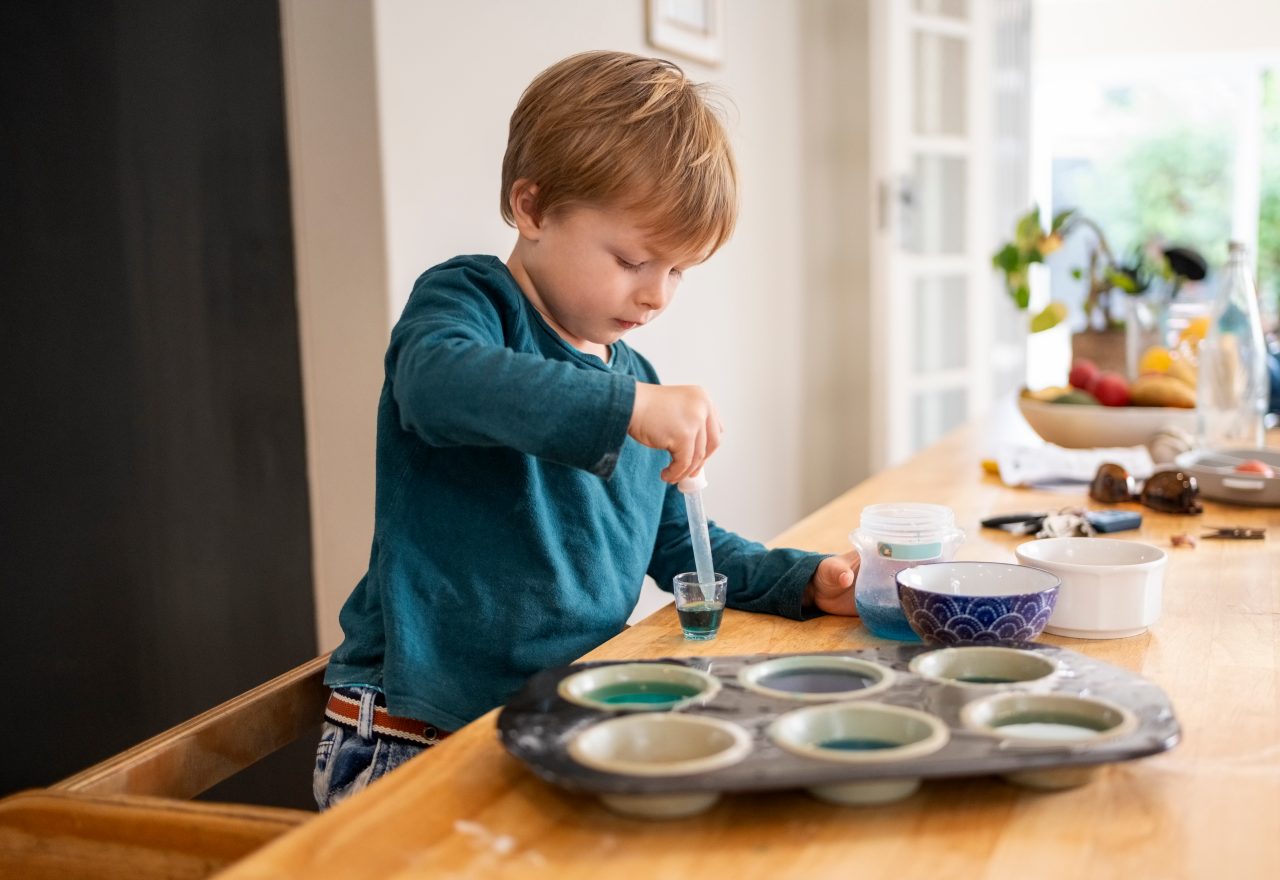
- Create a sensory station. Give your toddler a bowl of cornstarch and water to touch, stir and whisk while you cook.
- Try no-bake recipes. Older toddlers can help assemble simple recipes like fruit salad by adding pre-cut pieces to a bowl.
Cooking with Preschoolers
Preschoolers are ready for bigger jobs they can do on their own, insisting they don’t need help. Allow them lots of opportunities to bolster their budding independence.
- Give them independent tasks. Washing apples, snapping green beans, tearing lettuce, measuring water and pouring milk are all great preschooler jobs.
- Make a picture recipe. Write a recipe on a large sheet of paper. Add pictures along with the words to show amounts, like three eggs or two cups, so your child can count them out.
- Count while stirring. Ask your child to pick a number, then count out loud together as they stir.
- Practice with real tools. With close supervision, let your child try kid-friendly peelers and knives. Using real tools builds fine motor skills, focus and a sense of responsibility.
- Notice shapes. Talk about the shapes of food or the containers you use.
- Make predictions. Ask, “What do you think will happen when we heat this up?” Then watch and see. Making popcorn in a clear air popper is a fun way to watch science in action. (Popcorn is a choking hazard for children under 4, so this one is best for older preschoolers.)
Cooking with Kindergarteners and School-Age Kids
Big kids can handle a little more responsibility in the kitchen from meal planning to cleanup.
- Practice knife skills. Using a child-safe knife, explore different ways to cut vegetables, like dicing, chopping and slicing. Let your child decide which cut works best for the recipe.
- Let them do it themselves. Kids this age can measure, pour, whisk, stir and scoop independently. Don’t panic about mess. Spills happen and they’re usually easy to clean up. Ask your child to help!
- Invent a recipe. Ask your child how they think a recipe is made, then let them try creating their own. Make it together and then talk about what worked and what might change next time.
- Create a family menu. Ask your child to plan and draw a menu for a family meal, using their best sound-it-out spelling to label each dish.
Easy Recipes to Make with Kids
Not sure where to start? These kid-friendly recipes are simple, low-mess and great for little helpers:
- Fruit salad (with soft, pre-cut fruit for younger kids)
- Yogurt parfaits with fruit and granola
- Homemade pizzas on English muffins, naan or flatbread
- Smoothies
- Muffins
- Mini pancakes in a muffin tin
- Guacamole or hummus with veggies
- Trail mix (for older kids, since nuts are a choking hazard for children under 4)
Kitchen Safety Tips for Kids
A few ground rules keep kitchen time fun and safe:
- Always supervise children in the kitchen, especially around heat and sharp tools.
- Wash your hands before and after cooking, and after touching raw meat or eggs.
- Keep handles of pots and pans turned toward the back of the stove.
- Teach kids to stay a safe distance from the stove and oven.
- Don’t let kids taste raw dough or batter made with flour or eggs.
- Use sturdy stools or toddler towers so kids can safely reach the counter.
Cooking with your child is so much more than broken eggs and mess. It’s about connection, learning and creating shared memories. Whether you’re letting your baby hold a wooden spoon or working with your kindergartener to plan a menu, every moment in the kitchen nurtures their curiosity and independence. You’re also showing them that they’re capable and that you value their help.
Frequently Asked Questions
What are the benefits of cooking with kids?
Cooking with kids helps them build math, science, literacy and fine motor skills. It also teaches patience, safety and independence, encourages them to try new foods and creates time for family connection.
At what age can kids start helping in the kitchen?
Kids can join in at any age. Babies can watch and explore safe foods, toddlers can rinse produce and stir, preschoolers can measure and pour and school-age kids can create and follow recipes.
What are some easy cooking tasks for toddlers?
Toddlers can rinse fruits and vegetables, stir ingredients, tear lettuce and add pre-cut fruit to a bowl.
What can preschoolers do in the kitchen?
Preschoolers can wash produce, snap green beans, measure and pour liquids, count while stirring and, with supervision, use kid-friendly peelers and child-safe knives.
What are easy recipes to make with kids?
Try fruit salad, yogurt parfaits, English muffin pizzas, smoothies, mini muffins, pancakes or simple dips like guacamole or hummus.